
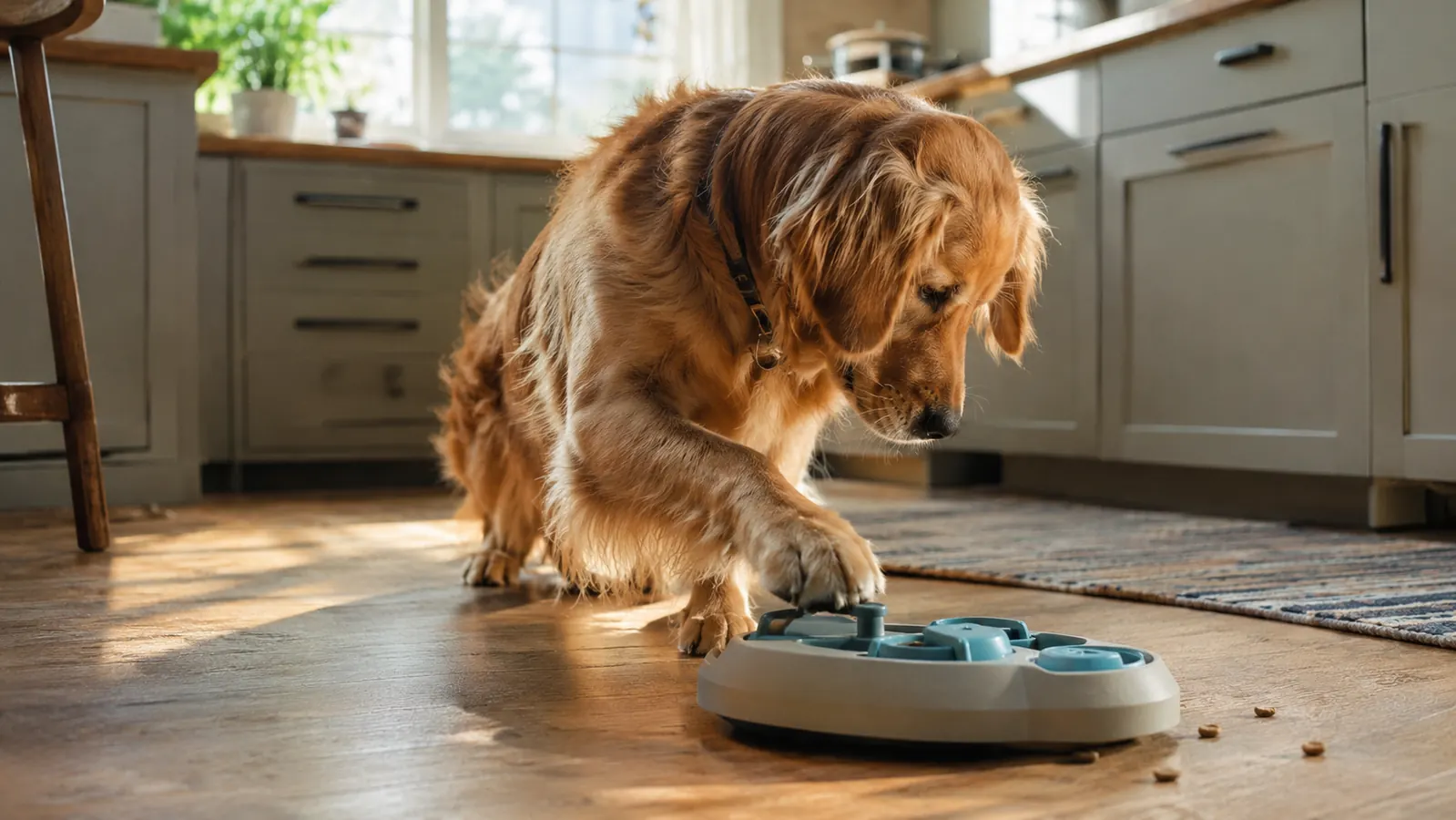
Maisie can finish a full bowl of kibble in about forty seconds. She is a 26 pound beagle mix, and if something is edible, she treats it like a race. So when I kept reading about the KONG Wobbler, a toy that makes a dog work for her dinner, I figured it was worth a try. This is the honest version of that experiment. Not the version where every toy is a hit and the dog poses for the camera. The Wobbler has been in our house for a few months now, through daily dinners and more than a few training sessions, and I have a clear picture of what it does well and where it gets on my nerves.
The short version is that it works, but it is not magic. Maisie still gets excited for dinner. She still eats every piece of kibble. The difference is that dinner now takes her twelve to fifteen minutes instead of forty seconds, and she is tuckered out in a way her bowl never managed. But there are also nights when she flips the toy, gets nothing out, and looks at me like I have personally wronged her. That is the part nobody puts in the product photos. I will tell you right now that I almost sent it back in the first week, and I am glad I did not.
The Quick Verdict
Slows a fast eater from forty seconds to a real meal, but it is louder than you expect and it will frustrate a dog who gives up easily.
Amazon Check Today's Price →A dinner toy that actually slows your fast eater down
Maisie went from inhaling dinner in forty seconds to working for twelve to fifteen minutes. If your dog eats like mine, the KONG Wobbler is worth a serious look.
Amazon Check Today's Price on Amazon →How I've Used It
I did not start with treats. Maisie has a sensitive stomach, and the last thing she needs is extra snacks on top of her regular food. So I put a portion of her dinner kibble in the toy instead of her bowl. About a third of a cup. The instructions say to start easy, so I set the opening wide and let her figure it out on her own.
The first time, she nudged it once, heard the kibble rattle, and went at it like it owed her money. She pushed it across the kitchen floor, tipped it over, and when the kibble spilled she ate it off the tile. By the third dinner she had learned to rock it instead of shoving it, and the kibble came out one piece at a time. Watching that learning curve is genuinely satisfying, and it is the reason I kept using it. It also means I can leave the room without worrying that she has finished her dinner before I pour my coffee.
I also used it during short training sessions in the kitchen. I would put a few pieces of her regular kibble in the Wobbler and let her work for them after she nailed a sit or a down. It doubled as a reward and a way to burn off some of the energy that usually ends up on my furniture.
Cleaning is simple, which matters more than you might think. I rinse the Wobbler with warm soapy water a couple of times a week, because kibble dust and drool collect around the opening. It dries fast, and there are no little parts to lose. Every few weeks I give it a deeper scrub in the sink, and it comes out looking like new.
What Nobody Tells You About the Noise
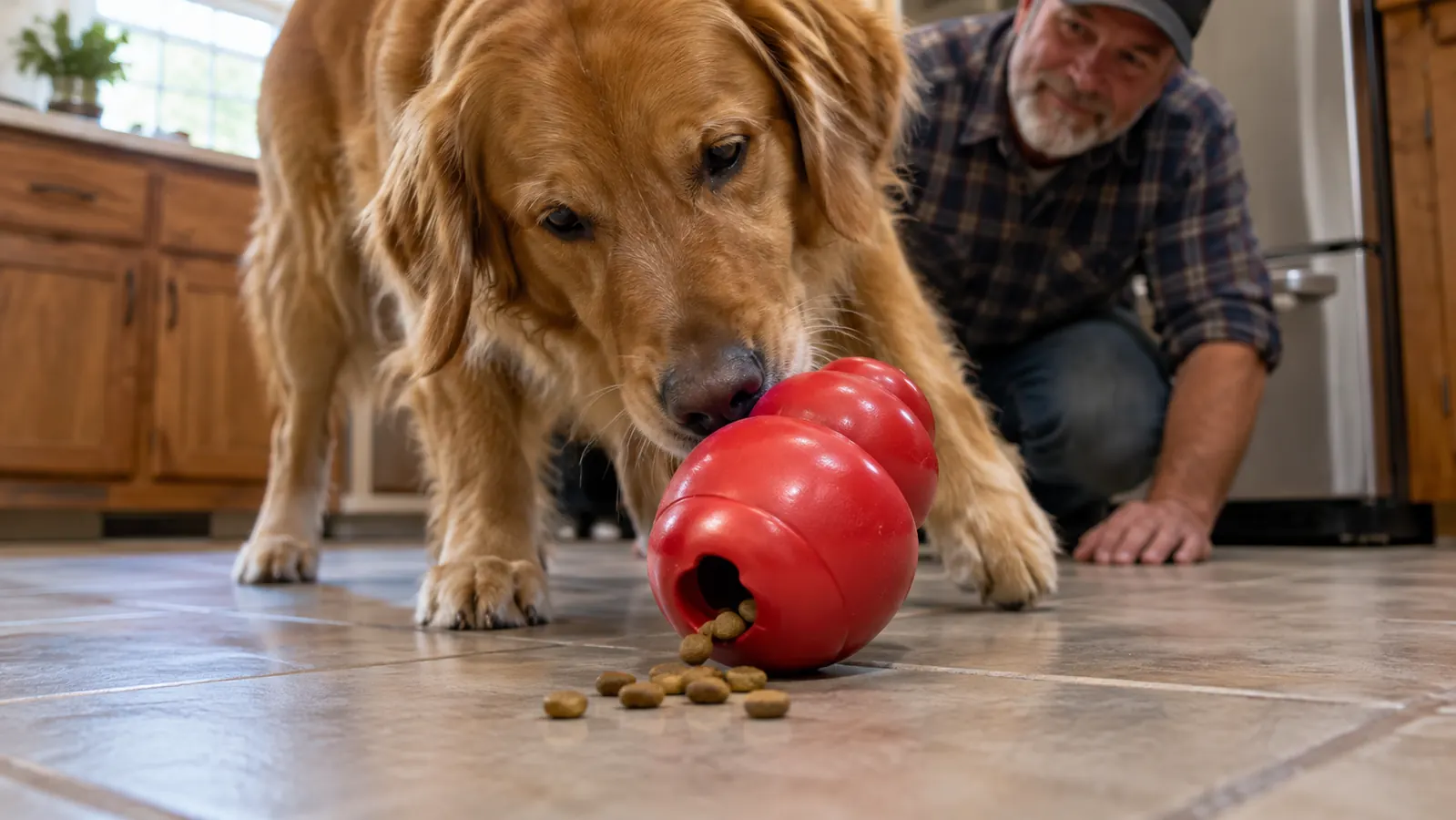
Here is the thing I did not expect: the Wobbler is loud. It is a thick rubber toy, and when a 26 pound dog shoves it across a tile floor, it thumps. The kibble rattles. On a quiet evening, the whole kitchen sounds like someone is rolling a bowling ball with a maraca inside it. If you have hard floors, you will hear this toy from the next room. I have learned to read with the television on.
On carpet, the problem flips. The Wobbler sinks into the pile and does not wobble the way it does on tile or wood. Maisie gets frustrated, picks it up by the opening, and drops it until the kibble shakes out. So we use it in the kitchen, where the floor is tile, and the living room carpet is reserved for the quieter toys.
How a 26 lb Dog Actually Handles the Size
The Wobbler is sold for medium and large dogs, and at 26 pounds Maisie is on the small end of that range. It is heavier than it looks, and that weight is part of why it works. When she shoves it, the toy rocks back and forth instead of skittering away, and the kibble falls out at the toy's pace, not hers. She has to work for every piece.
The flip side is that the opening is sized for a bigger dog's mouth. Maisie can get her nose in there, but she cannot tip the toy up and dump the contents the way a larger dog might. That is partly why dinner takes her so long. On the one hand, that is the point. On the other, I have watched her push the toy into a corner, get nothing out, and walk away in a huff. It happens a few times a week, and I just tip the toy back toward the middle of the floor and she goes again.
Capacity is another thing to know. The Wobbler holds a decent amount of kibble, maybe half a cup, which covers part of Maisie's dinner but not all of it. I still give her the rest in her regular bowl. For a bigger dog, this is a snack toy, not a dinner toy. For a dog her size, it is a solid chunk of the meal.
One more thing about the size. The Wobbler does not roll away the way a ball does, because the base is wider than the top. That is a feature when you are using it in a kitchen with a determined dog. She can shove it across the room, but it never gets under the couch or behind the refrigerator the way her other toys do. I appreciate that more than I expected.
The first time Maisie used it, dinner took her fourteen minutes instead of forty seconds. That is the whole story in two numbers.
The Sensitive Stomach Question
Because Maisie has a sensitive stomach, I was careful about what went into the Wobbler. The good news is that you do not need special treats. Regular kibble works, and since the kibble is her dinner, I simply subtract the amount from her bowl. She gets the same total food, just slower and with more effort. That matters for a dog who has thrown up from too many treats before.
I would add one caution. If you use the Wobbler every day, count what goes in. It is easy to fill the toy, watch the dog work for twenty minutes, and then fill the regular bowl on top of it. Before you know it, the dog has eaten a dinner and a half. With a sensitive stomach, that is a recipe for a rough night. I measure Maisie's kibble in the morning, set aside the Wobbler portion, and the bowl gets what is left.
One thing I want to be clear about: the Wobbler did not fix her picky days. Some mornings she looks at the toy and walks away, the same way she sometimes looks at her bowl and walks away. The toy is not a magic answer to a dog who is not hungry. It is a way to serve the meal, not a way to make her want it.
Where It Falls Short
No review is honest without the frustrations. The biggest one for us is the rim. Maisie has chewed the edge of the opening, and while the toy is still going strong, I do not think it is indestructible. If you have a power chewer, this is not the toy for them. It is made to be nudged and rocked, not gnawed on.
The second frustration is the floor thing I mentioned. The Wobbler needs a hard, flat surface to work. Carpet, grass, and uneven ground all defeat it, and a frustrated dog will start picking it up and dropping it, which is louder and messier than the wobble. If your whole house is carpeted, I would think twice before buying.
The third thing is the give-up factor. Maisie is stubborn, so she keeps at it. A less determined dog might nudge it a few times, get one or two pieces, and decide the bowl is easier. I have seen it happen with a friend's dog. The Wobbler rewards persistence, and not every dog has it. That is not a flaw in the toy, but it is a real thing to know before you buy.
The First Week vs. Now
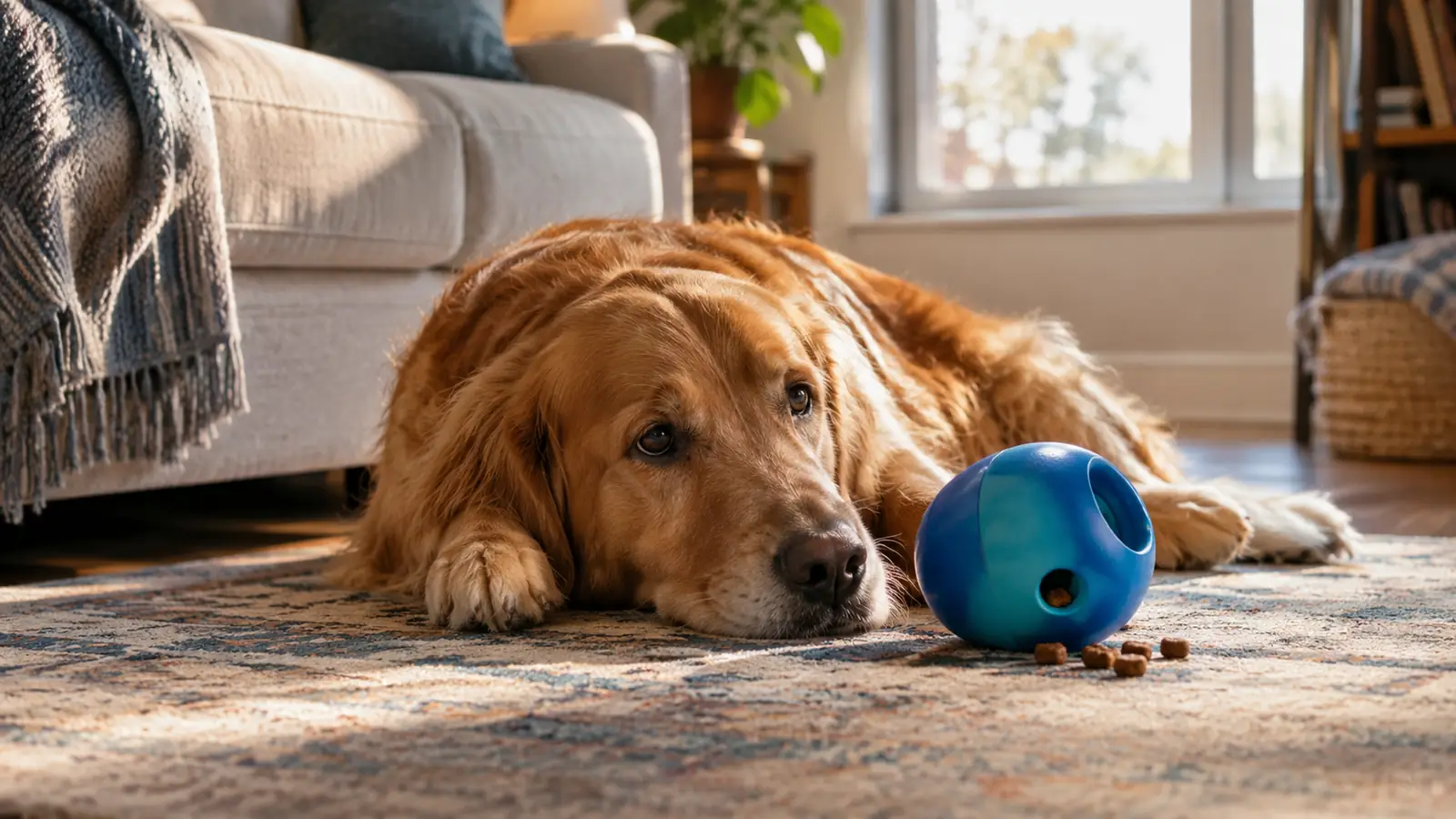
The first week, I hovered. I watched every nudge, worried that she would either figure it out too fast and lose interest, or not figure it out at all and give up. Neither happened. She learned at her own pace, and the novelty did not wear off the way it does with so many toys. Months in, she still trots to the kitchen when she sees me fill it.
What changed is her technique. Early on, she shoved the Wobbler all over the floor and half the kibble ended up under the refrigerator. Now she rocks it in place with her nose, waits for a piece to fall, and moves on. She also knows that when the rattling stops, dinner is over, and she comes to find me for the rest of her bowl. The routine is settled, and that is the highest praise I can give a toy.
The Alternatives I Looked At
I did not buy the Wobbler without shopping around. The Outward Hound Treat Tumble is the other name that comes up, and the two are different in a way that matters. The Treat Tumble rolls, so a dog can chase it across the room. The Wobbler stays put and rocks in place. For a dog who likes to chase, the Treat Tumble might be the better fit. For a dog who needs to slow down and work in one spot, the Wobbler wins. I went through the differences in a side-by-side comparison.
There is also a long-term review that tracks how the Wobbler holds up over months of daily use, because that is the question nobody can answer from the first week. And if you are wondering whether treat-dispensing toys are worth the money at all, there is a list of reasons they keep dogs busy that is worth reading before you decide.
Who This Is For
The KONG Wobbler is for a dog who eats fast, a dog who is food-motivated, and a dog who will stick with a puzzle for more than two minutes. It is for owners who are home to watch the first few sessions, because the toy needs a hard floor and a little coaching. And it is for anyone who wants dinner to double as a little exercise. Maisie is a better fit for this toy than I expected, and on most nights it earns its place in the kitchen.
Who Should Skip It
Skip it if your dog is a power chewer who destroys rubber toys in a weekend. Skip it if your house is all carpet. Skip it if your dog loses interest the moment a toy stops paying out instantly. And skip it if you are looking for a way to feed a full meal to a large dog, because the capacity is not there. The Wobbler is a tool for a specific job, and for the right dog it does that job well. For everyone else, it is a loud rubber thing that takes up floor space. And if you are reading this because your dog already has a basket of ignored toys, I would borrow one before you buy.
The Bottom Line
I have owned a lot of dog toys over the years, and most of them end up in a basket in the corner. The Wobbler is not one of those. It earns its keep because it does something a bowl cannot do: it makes Maisie work for her food, and that work settles her down in a way that nothing else does. It is not perfect. It is loud, it needs the right floor, and it will not survive a serious chewer. But for a food-motivated dog like mine, it has been a genuine improvement to the dinner routine, and that is more than I can say for most of what I have bought. I would buy it again, and I do not say that about many toys.
What I Liked
- Slows a fast eater from forty seconds to twelve or fifteen minutes per meal
- Uses regular kibble, so no extra treats and no upset stomach
- Adjustable opening lets you control the difficulty
- Sturdy enough for daily use from a 26 pound dog
- Easy to clean with warm soapy water
Where It Falls Short
- Loud on hard floors, the whole house hears dinner
- Does not work on carpet or grass
- Opening is sized for bigger mouths, so smaller dogs work harder
- A power chewer can damage the rim
- Holds only part of a meal, not a full dinner for a large dog
If your dog inhales dinner, this is worth trying
Maisie went from inhaling her dinner to working for it with the KONG Wobbler, and her sensitive stomach never complained because she ate the same kibble, just slower. See today's price on Amazon and decide whether a slower dinner is worth it for your dog.
Amazon Check Today's Price on Amazon →