
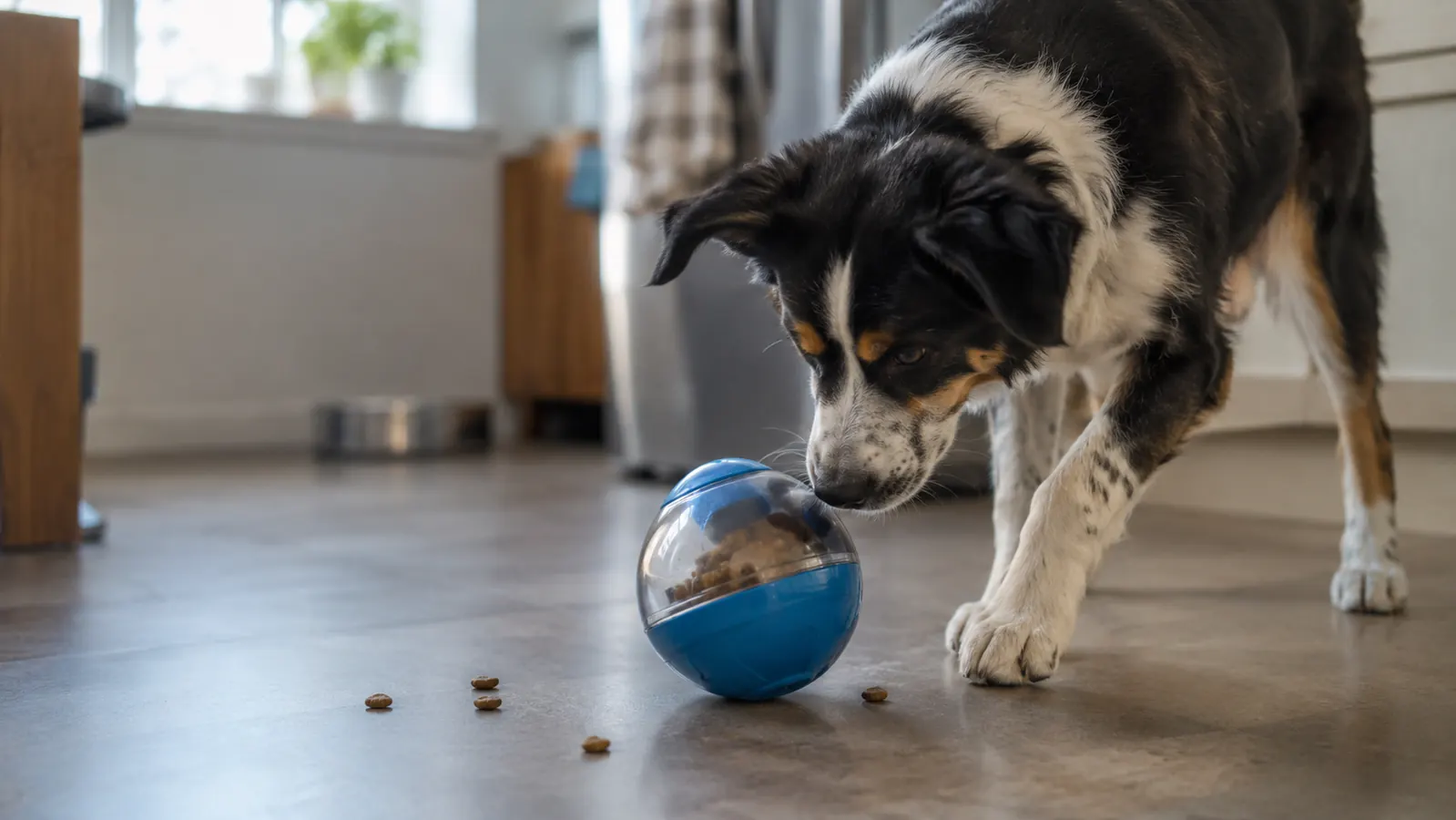
Maisie finished her dinner in about thirty seconds, every single night. She would inhale her kibble, then spend the next hour licking the bowl and looking at me like I had forgotten the rest of her meal. I tried a slow feeder bowl, and it helped for about a week. I tried scattering her food across the backyard, and that worked until it rained. Then I tried the KONG Wobbler, and I did not expect a wobbling plastic toy to become part of our daily routine. Eight months later, it still is.
The Wobbler is simple to use. You unscrew the top, pour in kibble or small treats, screw it back together, and set it on the floor. Maisie bats it with her nose and her paws, it tips over, a few pieces slide out of the opening, and then it rocks back upright on its weighted base. She has to keep working for every piece. What used to take her thirty seconds now takes ten minutes, sometimes more, and she ends the meal tired in a way a bowl of food never manages.
I bought the Wobbler for a specific reason. Maisie had started eating her meals so fast that she would gulp air and burp through the evening, and the vet suggested slowing her down. I tried every idea I could think of. The Wobbler was the one thing that actually changed how she eats, and it did it on the first day.
The Quick Verdict
After eight months of daily use, the KONG Wobbler is the toy I reach for most. It slows Maisie down, gives her a real job to do, and has held up far better than I expected. It is not for every dog, but for a food-motivated dog with a sensitive stomach, it has been a quiet win.
Amazon Check Today's Price →A treat toy that turned my fast eater into a slow, happy worker
The KONG Wobbler uses the kibble you already have, so it fits a sensitive stomach and a sensible budget. See today's price on Amazon and decide if it belongs in your routine.
Amazon Check Today's Price on Amazon →How I've Used It
The Wobbler arrived on a Tuesday. I filled it with about a quarter cup of Maisie's regular kibble, set it on the kitchen floor, and stood back. She sniffed it once, then batted it with her paw. The whole thing tipped, three pieces of kibble slid out, and she looked at me like she had just discovered fire. She was still working on it twenty minutes later. That first session sold me on the idea.
Now it is part of the routine. Most days she gets part of her breakfast in the Wobbler and part of her dinner in the Wobbler. Some days I use it for her afternoon snack instead. I keep the pieces small because Maisie has a sensitive stomach, and the Wobbler only lets out what fits through the opening, which means I control exactly how much she gets and how fast she gets it. It also shows up in our kitchen training sessions. When Maisie practices a sit-stay, I drop a few pieces of kibble into the Wobbler and let her work for them as the reward. It turns the end of a training session into a game, and it reinforces the idea that good things come from working for food.
I also reach for it on days when the weather keeps us inside. A rainy afternoon with Maisie is a lot easier when she has ten minutes of wobbling to do before she settles down. It is not a replacement for a walk, but it takes the edge off, and it gives me a few quiet minutes with my coffee.
How the KONG Wobbler Works
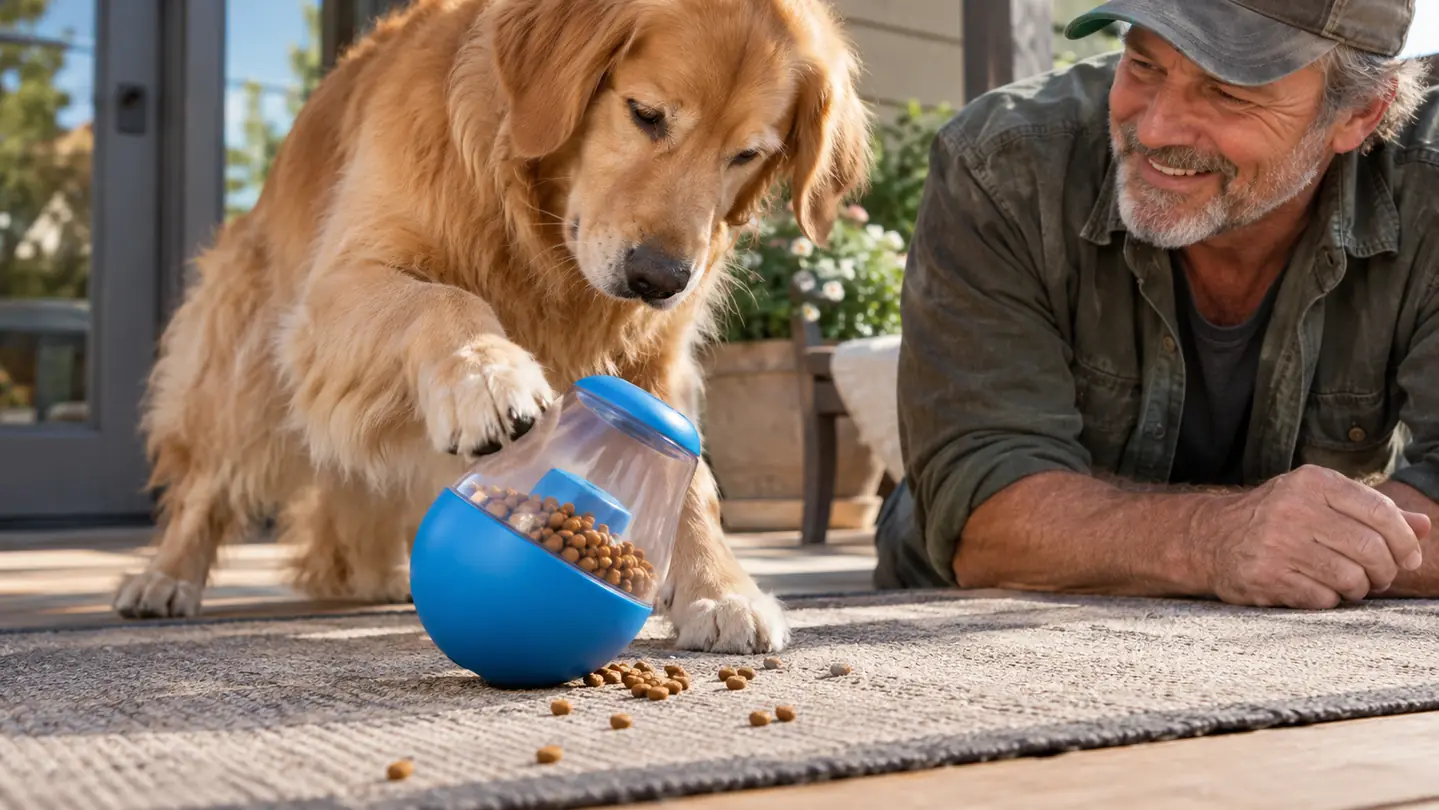
The design is straightforward. The Wobbler is made of two pieces that screw together. The bottom is weighted, so when the dog knocks it over, it rocks back to standing on its own. The top has an opening that lets out a few pieces at a time. The dog has to figure out that knocking it over in the right way gets more food out. Maisie learned that in one session, but she still has to work for every piece, and the work is what tires her out.
It is not a toy that dumps everything at once, and it is not a puzzle that demands one specific move. It rewards persistence. That is the part I like most. She noses it across the kitchen, bats it with her paws, and once in a while picks it up and drops it. The weight of the base keeps it from flying across the room, which matters on a hard floor.
The size works well for a 26 lb dog. The Wobbler is built for medium and large dogs, and at first I worried it would be too big for Maisie. It is not. She has to lean into it to tip it, and that little bit of effort is exactly what makes the game work. A smaller dog might struggle, but for her size, it is a good match.
Cleaning is simple. I rinse it out in the sink every few days, and once a week I wash it in warm soapy water and let it air dry. The pieces come apart easily, so there are no corners where old food hides. That matters in this house, because anything that holds food has to be easy to keep clean.
What Months of Daily Use Taught Me
The honest version is that I expected the novelty to wear off. Maisie is smart, and she figures most puzzle toys out within a week. The Wobbler is different. Eight months in, she still runs to the kitchen when she hears me unscrew the top. The wobble is unpredictable enough that the game does not get boring, and the reward is real food, which keeps her interested in a way a squeaker never does.
It has also held up. The plastic has scratches and a few scuffs from being knocked into the baseboard, but there are no cracks, no chips, and no pieces that have come loose. Maisie is not a chewer, so I cannot speak for a dog who is determined to destroy things. For normal daily use, the build quality has been exactly what I hoped for.
The one thing I would warn about is the noise. On our kitchen floor, the Wobbler makes a hollow clunk every time it tips, and Maisie can keep it going for ten minutes straight. It does not bother me, but if you live in an apartment with neighbors below, you will hear it. A rug or a mat under the toy helps a lot, and we keep one there now.
The other lesson is about portion control. Because the Wobbler only releases a few pieces at a time, it is easy to lose track of how much has come out. I measure Maisie's kibble before I fill it, and whatever goes in the Wobbler comes out of her daily total. That keeps her sensitive stomach happy and keeps her weight steady, which matters more now that she is five.
What Goes In Matters
Maisie has a sensitive stomach. She has thrown up more times than I can count after being handed the wrong treat at the dog park, and I have learned to read every ingredient label twice. What I like about the Wobbler is that I am not adding anything. It takes her regular kibble, the same food she eats every day, and turns it into a game.
That matters more than it sounds. Most treat toys assume you will fill them with something special, and something special is usually something rich. With the Wobbler, I can use her normal breakfast and dinner portions. She gets the mental workout without the extra calories and without the upset stomach. For a dog like Maisie, that is the whole point.
When I do use treats, I stick to small, single-ingredient pieces that I know agree with her. The opening on the Wobbler is sized for kibble and small treats, so anything bigger has to be broken up anyway. That is a feature, not a flaw. It forces me to keep portions small, and it means I never have to buy a special filler to make the toy work.
I have also learned to pair the Wobbler with her meals instead of adding it on top of them. If she gets a full breakfast in her bowl and then a full Wobbler, that is too much food for her stomach. Instead, I split the meal. Half goes in the bowl, half goes in the Wobbler, and she gets the same total amount she always does.
What I'd Change
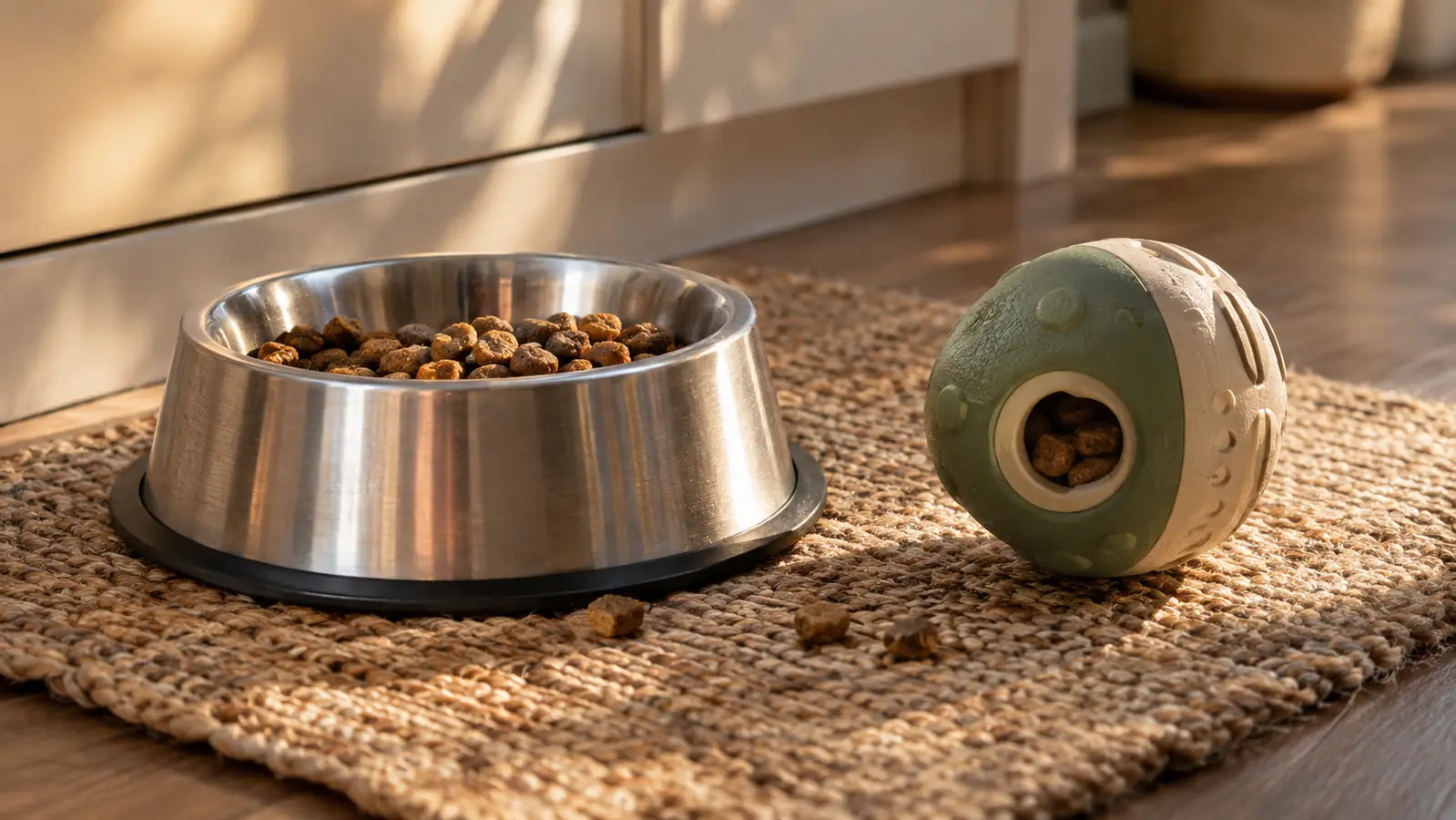
No product is perfect, and the Wobbler has a few rough edges. The noise is the biggest one. There is no way around the fact that a weighted plastic toy hitting a hard floor makes a racket. A rug helps, and I keep one under it now, but it is worth knowing before you buy. If you are sensitive to noise, factor that in.
I also wish the opening were adjustable. Some days I want to make the game harder by releasing fewer pieces, and some days I want it easier. The Wobbler has one setting, and it is what it is. For Maisie it is the right difficulty, but a dog who gets frustrated easily might give up, and a dog who is too clever might solve it faster than you expect.
The capacity is modest. I can fit about half a cup of kibble in the top, which is enough for a meal for a dog Maisie's size but not enough for a long stretch of alone time. This is a toy for supervised sessions, not a way to keep a dog busy all afternoon. If you need hours of quiet, look elsewhere.
One small thing: the two pieces screw together tightly, and I have to line up the threads or the top pops apart mid-game. It takes two seconds to fix, but it is worth mentioning.
What I Liked
- Slows down a fast eater without any fuss
- Uses the kibble you already have, so it fits a sensitive stomach
- Durable enough for months of daily use in my house
- Weighted base rights itself, so the game keeps going
- Easy to take apart and rinse clean
Where It Falls Short
- Loud on hard floors, a rug is almost required
- Small opening means treats have to be cut into little pieces
- Not for frustrated dogs or determined chewers
- Holds less than you might expect, so sessions are short
Eight months in, Maisie still runs to the kitchen when she hears me unscrew the top, and the Wobbler still wobbles like the day it arrived.
Who This Is For
If you have a food-motivated dog, the Wobbler is worth a serious look. It is perfect for fast eaters who finish dinner in seconds, for smart dogs who need a job, and for owners who want to use regular kibble instead of loading up on extra treats. If your dog is anything like Maisie, the wobble itself is half the fun.
It is also a good fit for rainy days, busy evenings, and any time you need fifteen minutes of quiet. It is not a substitute for exercise, but it is a genuinely useful tool for taking the edge off. In our house, it has earned a permanent spot on the kitchen counter.
Who Should Skip It
The Wobbler is not for every dog. If your dog gives up quickly when a toy does not cooperate, the wobble might frustrate instead of entertain. If your dog chews through everything, the plastic will not survive, no matter how well it is made. And if your dog is not interested in food, there is nothing here to hold their attention.
I would also skip it if you need a toy that keeps a dog busy for hours. The Wobbler holds a meal's worth of kibble at most, and once it is empty, the game is over. For a long stretch of alone time, you need something that lasts longer. The Wobbler is a tool for focused play, not a babysitter.
I would think twice in a multi-dog household as well. Maisie is an only dog, so I have not dealt with this myself, but a food toy in a two-dog house can become a source of squabbling. If your dogs guard food, the Wobbler is not the right choice.
The Wobbler earned its spot in our kitchen
Months of daily use, no cracks, and a dog who still treats it like the best part of her day. If that sounds like your dog, check today's price on Amazon.
Amazon Check Today's Price on Amazon →