
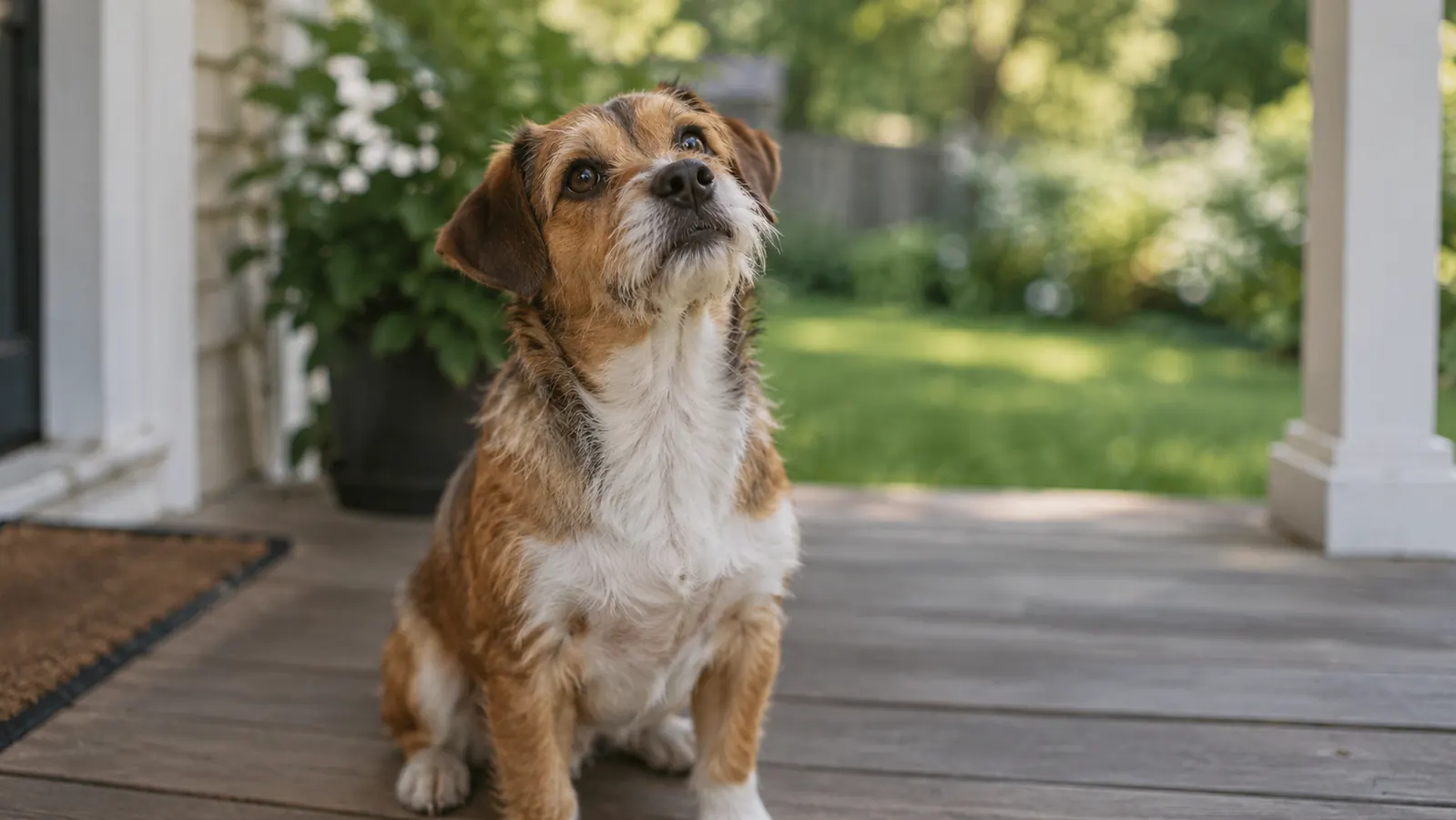
The first time I noticed it, Maisie yawned right in my face during our morning snuggle. I nearly fell off the couch. My 26-pound beagle mix has a lot of wonderful qualities. Fresh breath is not one of them. I tried brushing her teeth with one of those finger brushes and it went about as well as you would expect. She treated it like a wrestling match, I ended up with toothpaste on my shirt, and neither of us was speaking by the end. The vet said her teeth looked okay for now, but she could already see plaque building on the back molars. She suggested I find something Maisie actually enjoyed chewing on, something with the right texture to scrape the teeth clean. That is how I ended up with a bag of Dentalife Daily Oral Care Dog Treats, and honestly, it has changed our morning routine.
This guide is the routine I landed on after a few months of trial and error. It is simple, it takes about two minutes a day, and it does not require a single drop of dog toothpaste. If your dog's breath could knock a fly out of the air, or if your vet has mentioned tartar starting to build, this is the step-by-step plan that worked for us.
Start Today With the Chew Maisie Actually Finishes
Dentalife Daily Oral Care Dog Treats are shaped with ridges that scrub the teeth while your dog chews, and Maisie treats them like a reward rather than a chore. With over 10,000 ratings and a 4.7-star average, it is the easiest dental routine I have found.
Amazon Check Today's Price on Amazon →Step 1: Pick the Right Size and Stick to One Chew a Day
Dentalife makes different sizes for different dogs. Maisie is 26 pounds, so I buy the small to medium version. The bag says it is for dogs up to about 25 pounds, and Maisie sits right at the edge, so I keep an eye on her when she eats it. The sizing matters more than you might think. The first bag I bought was the larger size, meant for bigger dogs, and Maisie could not manage it. She gnawed at it for a few minutes, then left half of it on the kitchen floor for the rest of the day. I switched to the small to medium bag and she finished the whole thing in one sitting. That was the week I learned the size on the front of the bag is not a suggestion. A chew that is too big is hard for a small dog to manage, and a chew that is too small disappears in three bites without doing any scrubbing.
The package directions say one chew per day, and I follow that exactly. Maisie has a sensitive stomach, so I learned early on not to get creative with the serving size. One chew after breakfast, every single day. That consistency is what actually keeps her breath fresh. A chew every now and then is a treat. A chew every day is a routine, and a routine is what changes anything.
I keep the bag on a shelf in the pantry next to her regular treats. It is out of reach, because if Maisie could open that pantry door herself, the bag would not survive the week. She knows exactly where it lives now, and she sits by the pantry every morning about ten minutes after breakfast, waiting.
Step 2: Give It After a Meal, Not Before
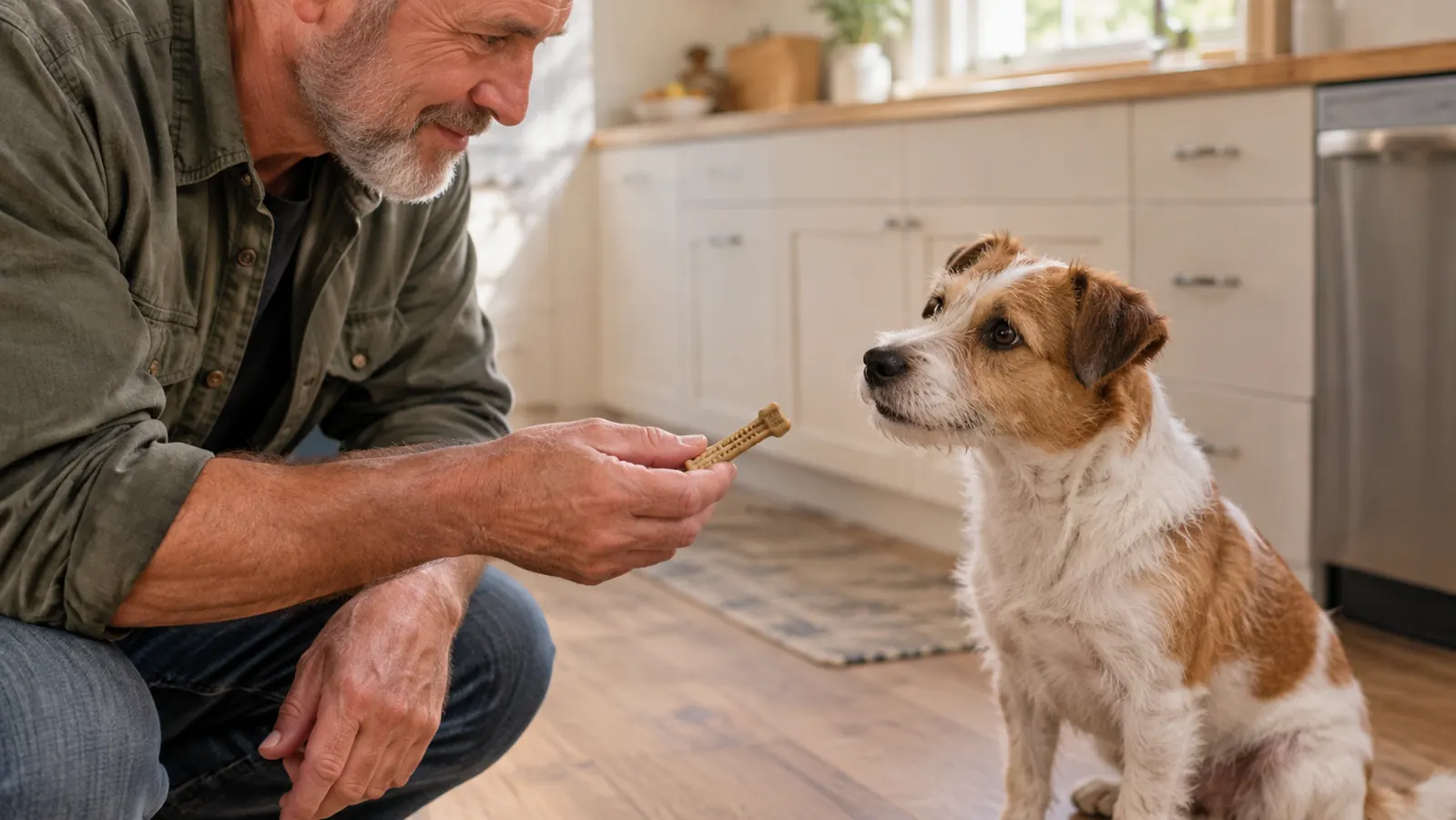
Timing turned out to be the detail that made everything click. At first I gave Maisie her Dentalife chew as a mid-morning snack, and it worked fine. But when I moved it to right after breakfast, her breath stayed fresher all day. I remember the morning I figured it out. It was a Tuesday in early March, and we had just come back from our walk. I gave Maisie her chew right after she finished her breakfast, and by noon her breath was noticeably softer when she came to check my sandwich. The next day I tried the old mid-morning timing just to test it, and the difference was clear enough that I never went back. The chewing action right after a meal knocks food particles loose from the teeth before they have time to harden into plaque.
The ridges on the Dentalife chew are the part that does the work. As Maisie crunches through it, the raised bumps rub against the surface of her teeth and along the gum line. It is not a substitute for a professional cleaning, and I am not going to pretend it is. But for everyday maintenance between vet visits, it is doing more than any biscuit ever did.
I also make sure she has a little water after the chew. It washes down any bits that break off and keeps her mouth from feeling dry. Maisie is not picky about water, she drinks from her bowl like she has been in a desert, but the routine of chew, then water, then a pat on the head is what sticks.
Step 3: Let Her Chew at Her Own Pace
Maisie is a fast eater. She inhales her breakfast in about forty-five seconds, which I am pretty sure is a beagle skill. So my first instinct was to give her the Dentalife chew and go unload the dishwasher while she finished it. Bad idea. The first time she gulped one down, I timed it on the stove clock. Forty-seven seconds, gone, and I could not tell if it had done any good. When I started sitting on the floor with her, the same chew took just over four minutes. Same dog, same morning, same chew. The only difference was my being there, and those extra three minutes are when the ridges actually get to do their scraping.
Now I sit with her while she chews. Not because she needs supervision, she is fine alone, but because she chews slower when I am there. It takes her three or four minutes to work through the whole chew, and those extra minutes mean more contact between the ridges and her teeth. I have read that the longer a dog chews, the more plaque gets scrubbed off, and that matches what I have seen with Maisie.
If your dog is a gulper like mine, try handing over the chew and staying nearby. Or break it into two pieces and give the second half a few minutes later. Dentalife chews are not hard like some antlers or bones, they are more like a firm biscuit, so they soften as the dog chews. That makes them a good option even for a dog like Maisie who has never had a dental issue beyond the plaque the vet spotted.
Step 4: Watch Her Teeth and Gums Over the First Few Weeks
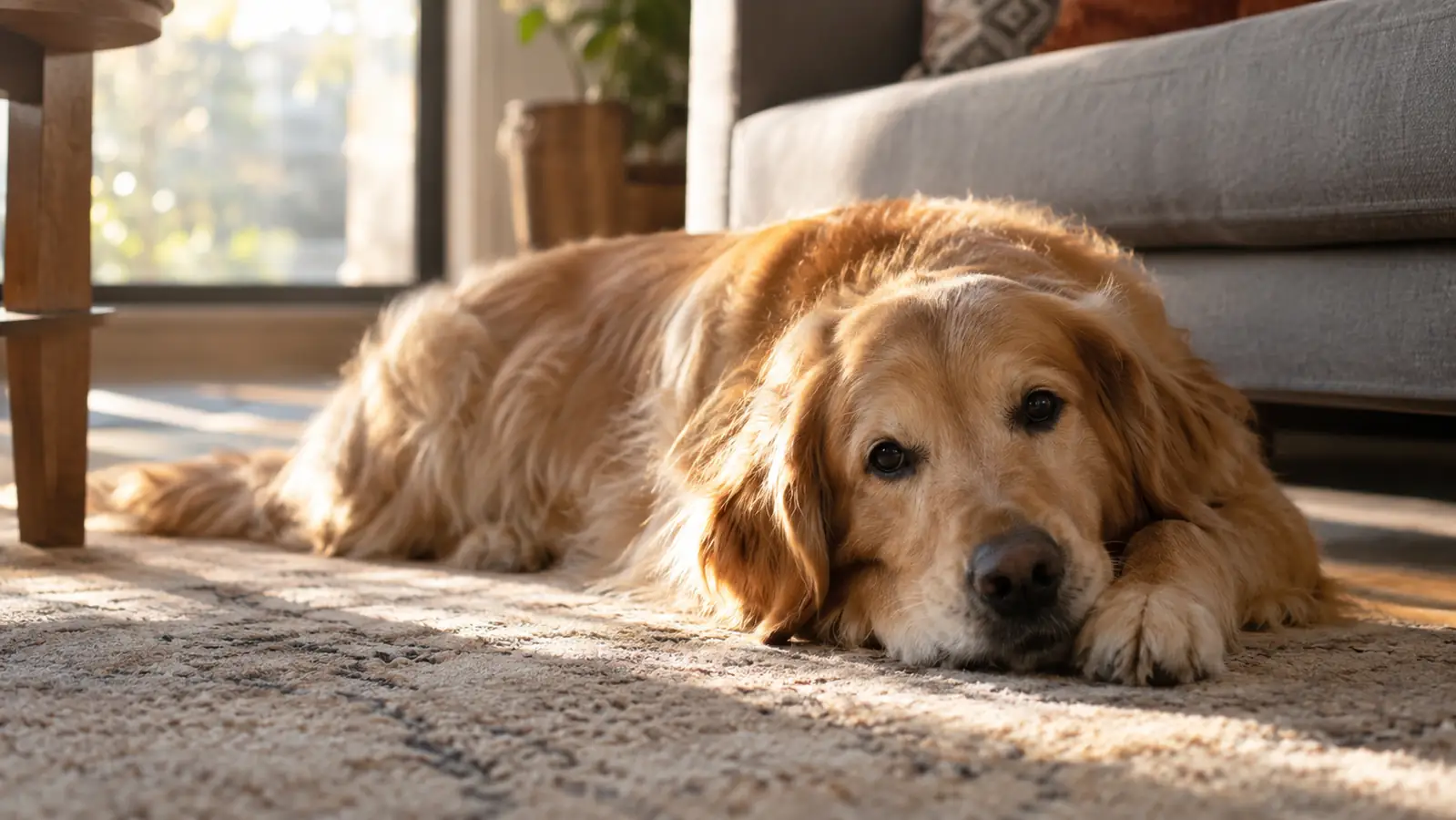
When you start any new dental routine, you want to keep an eye on the gums. The first time I gave Maisie a Dentalife chew, I checked her mouth afterward to make sure nothing was irritated. It was a Thursday evening, and she had just finished the chew on the back porch. I lifted her lip and looked at the back molars under the porch light. Her gums looked fine, a little pinker than usual from the rubbing, but no bleeding and no sore spots. By the end of the first week, her gums had settled down and her teeth actually looked brighter.
I also noticed the difference in her breath around day four. The strong, fishy smell that used to greet me every morning was gone, replaced by just a normal dog smell. Not minty fresh, mind you. I am not sure any chew is going to make a dog's mouth smell like a garden. But the difference was real, and it was enough that I stopped bracing myself when she came in for a kiss. By the end of the second week, I caught myself letting her lick my face without turning away first, which had not happened in months.
Keep an eye out for any changes in chewing behavior too. If your dog suddenly drops the chew or starts pawing at her mouth, check for a cracked tooth or a piece of chew stuck between teeth. We have not had that problem with Dentalife, but it is worth knowing what to look for with any new treat.
Step 5: Pair the Chew With a Quick Weekly Check
A daily chew handles the everyday stuff, but it is not the whole picture. Once a week, usually on Sunday morning after our walk, I do a two-minute check of Maisie's mouth. I lift her lips, look at the back molars, and check for any buildup, redness, or weird smells. It takes almost no time, and it catches problems before they become expensive vet visits.
The Dentalife chew keeps the visible plaque down, but the back teeth are where tartar likes to hide. If I see anything that looks off, I call the vet. Maisie had a professional dental cleaning last May, and the vet told me then that most five-year-old dogs already show visible tartar on the back molars. Maisie had a little, but nowhere near what the vet expected for her age. At our checkup in September, the vet tech said her teeth looked better than they had at the cleaning a few months earlier. The vet told me that daily chewing was the single best thing I could do to stretch the time between cleanings. That is exactly what we have been doing.
I also use the weekly check as a chance to touch her mouth and teeth without her thinking it is a fight. She gets a small piece of her regular biscuit afterward, so she actually looks forward to it now. It took a few weeks, but she went from dodging my hand to sitting still for the whole check.
What Else Helps
The Dentalife chew does the heavy lifting, but I have added a few small things that made the routine even more effective. First, I stopped leaving her food bowl down all day. Maisie grazes, and food sitting in her bowl means food sitting on her teeth. Now she eats breakfast and dinner at set times, and the chew comes right after breakfast. That one change alone cut down on the stale smell.
Second, I started paying attention to what was in her treats. Maisie has a sensitive stomach, so I read every label. Dentalife chews have a short ingredient list with no artificial colors, which is one of the reasons I stuck with them. The less junk she eats, the better her mouth smells, and the happier her stomach is.
Third, I make sure she has plenty of chew toys besides the Dentalife. A dog that chews on a rope toy or a rubber bone is scraping her teeth a little bit even when she is just playing. It is not the same as a dental chew, but it all adds up. And it keeps her from chewing on my shoes, which is a whole separate battle I do not miss.
Four days in, the difference in her breath was real enough that I stopped bracing myself when she came in for a kiss.
One more thing worth mentioning: water. Maisie drinks a lot, but I noticed her breath got worse on days when her water bowl was low. Now I refresh it every morning and every evening. It sounds too simple to matter, but a well-hydrated dog has a cleaner mouth. I will take every easy win I can get.
Give the Routine a Week and See the Difference Yourself
One Dentalife chew a day, right after breakfast, is the whole routine. With a 4.7-star average across over 10,000 ratings, it is the most reliable dental chew I have tried with Maisie. Your dog gets a treat, and you get fresher breath and cleaner teeth without the toothbrush fight.
Amazon Check Today's Price on Amazon →