

Maisie is 26 pounds of beagle mix with one main goal in life: getting the next treat. She is five years old, very food motivated, and has a sensitive stomach that has ended more than one promising treat experiment in my kitchen. So when our vet mentioned her teeth at her annual checkup last year, I did what I always do. I went looking for a dental chew that might actually help, and I landed on Dentalife. Months later, after a bag a month, I have a clear picture of what this chew does and does not do.
The short version: Dentalife became part of our nightly routine, Maisie loves them, and her breath is noticeably better. But they are not a replacement for brushing, they do not last long, and they will not fix teeth that already need a vet. Here is the full story from months of daily use with a picky, sensitive-stomached beagle mix.
The Quick Verdict
An easy, affordable daily dental chew that improved Maisie's breath and kept her teeth cleaner between brushings. Just do not expect it to replace a vet visit or a toothbrush.
Amazon Check Today's Price →A dental chew worth adding to the nightly routine
If you want a daily chew that Maisie actually finishes and that helps with plaque and tartar between brushings, Dentalife is the one I kept buying. Check today's price on Amazon and see if it fits your dog's routine.
Amazon Check Today's Price on Amazon →How I've Used It
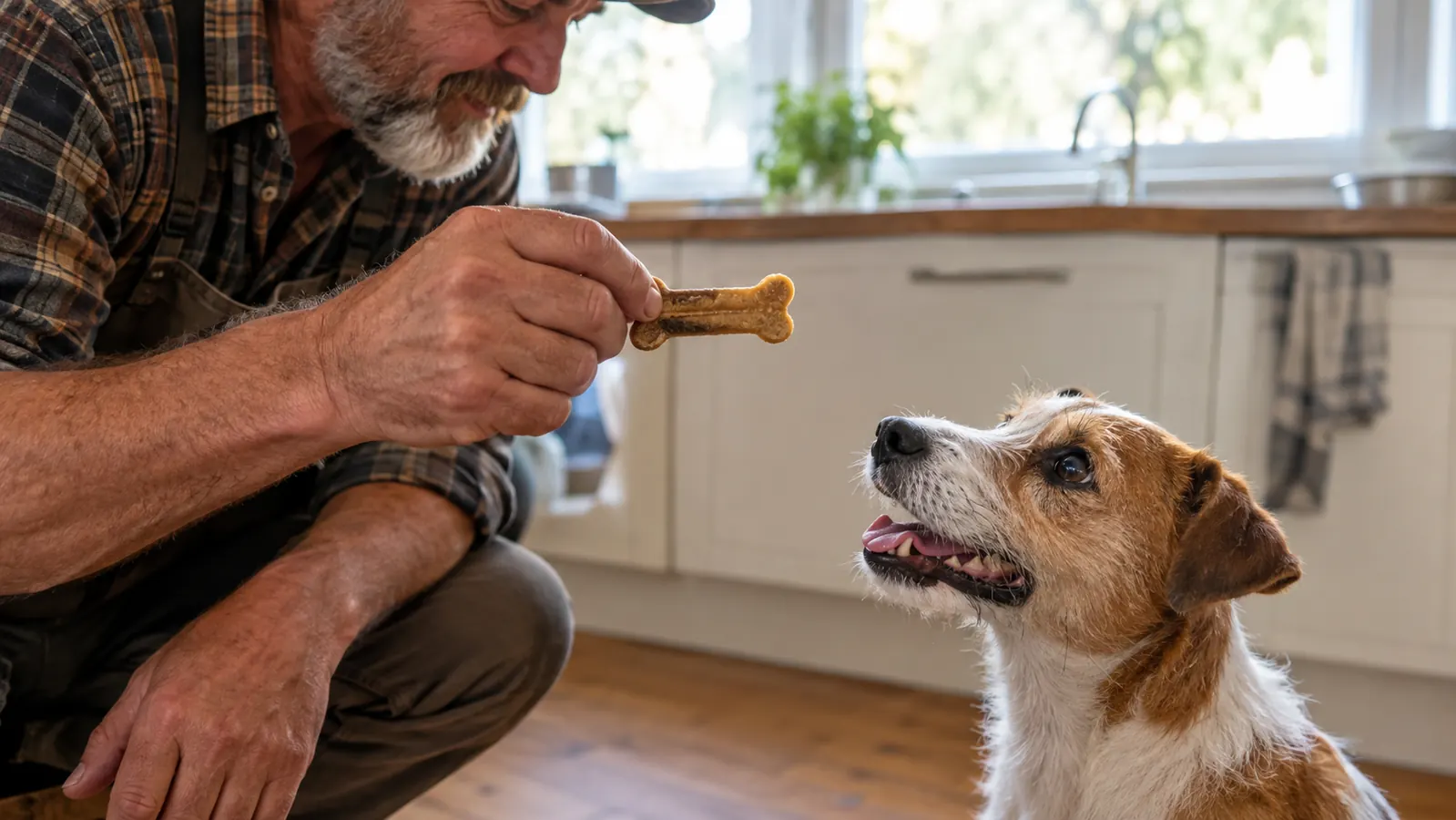
I gave Maisie one Dentalife chew every single night after her evening walk, usually right before I started making dinner. She knows the routine now. The moment I open the pantry, she is sitting at my feet with her tail going. The chew is shaped like a little toothbrush, which sounds gimmicky, but the ridges and bristle-like bumps are exactly what scrubs the teeth while she chews. I started on a Tuesday night in early September, the same week her annual checkup came back with a note about plaque on her back molars. The first chew I put down in front of her, she sniffed it for a full minute before she picked it up. Beagles are suspicious of new things even when they love food.
The 40 count bag lasted us about five weeks, since I gave her one a day. Each chew took her somewhere between five and ten minutes to finish, depending on how determined she was. She is a gulper by nature, so I watched her closely the first few times. The chews softened as she worked them, and she never tried to swallow a big piece whole, but I would still recommend supervising any dog with a new chew, especially a fast eater. By the third night she was waiting by the pantry door at the same time, and by the end of the first week she had claimed the spot on the kitchen rug where she always eats it. I also learned to give it to her on an empty stomach, because a full stomach made her lose interest halfway through and the leftover piece would sit on the rug until I picked it up. Now she gets it at least an hour before dinner.
I also kept brushing her teeth twice a week, because no chew replaces a brush. What Dentalife did was fill the gap on the other five days and give her something she genuinely looked forward to. The routine is simple. We come back from our evening walk, I fill her water bowl, and while I start pulling out dinner ingredients she gets her chew. She takes it to the same corner of the rug every time. I use the time to unload the dishwasher or chop vegetables. The only time I skip the chew is if Maisie has had a big meal or is feeling off. On those nights I just save it for the morning.
What's Actually in the Chew
The ingredient list is short, which matters to me because of Maisie's stomach. The first ingredient is rice flour, followed by wheat flour, glycerin, and a few other things I recognize. There is no rawhide, no artificial colors, and no chicken, which is important because Maisie does not do well with chicken. The texture is firm but not rock hard, and it breaks down in a way that seems to actually scrub rather than just soften into a paste.
Dentalife makes these in different sizes, and the small to medium version is the right fit for a 26 pound dog. The larger version would be too much for her, and the tiny version would be gone in two bites. The size range on the bag is clear, and I would follow it rather than guessing.
The one thing I will flag: these are not a meal and they are not a low-calorie snack. Each chew has about 75 calories, which matters for a small dog who gets treats throughout the day. I cut back her evening kibble slightly to make room, and that kept her weight steady. If your dog is prone to packing on pounds, count these in the daily total.
I read the ingredient list out loud to myself the first time, because Maisie's stomach has taught me to check everything. Rice flour, wheat flour, glycerin, water, and a few preservatives and minerals. Nothing I had to look up twice. There is no chicken meal hiding in there, which is the first thing I look for, and no rawhide, which is the second. The chews have a faint smell, not a strong one, and they do not leave a greasy spot on the rug the way some treats do. I also checked the bag for a made in label and a feeding guide, because I like to know where a treat comes from before I hand it over. The chews are made in the USA, which was another point in their favor.
What Changed After Months of Daily Use
The most obvious change was her breath. Before Dentalife, Maisie's morning breath could clear a room. After about two weeks of daily chews, it was noticeably better. Not minty fresh, but no longer offensive. That alone was worth the price of the bag. The breath improvement had a timeline I could track. The first week there was no change. Somewhere in the second week I noticed I was not turning my head when she yawned in the car. By the end of the first month, the smell that used to linger on her toys was mostly gone.
The second change was the visible tartar on her back molars. It did not disappear, but it stopped getting worse, and the buildup that was there seemed softer and less crusty after a month. Her vet noticed at her follow up visit and asked what I had changed. When I told her, she said it was a reasonable addition as long as I kept brushing. I took a photo of her teeth the day we started and another one eight weeks later, mostly because I did not trust my memory. The difference was small but real. The brownish stain along the gum line on her left side had not spread, and the tartar on her back molars looked less like a crust and more like a film.
The third thing I noticed was behavioral. Maisie is a chewer, and the nightly chew gave her a focused outlet that seemed to settle her down before bed. It became a ritual she looked forward to, and honestly, so did I. There is something nice about ending the day with a calm dog happily working on a chew. It was not a transformation. It was maintenance, which is exactly what the vet said it would be. She used to get a little restless in the evenings, pacing between the living room and the kitchen while I cleaned up. The chew gives her a job to do, and once she is done she is ready to settle on the couch. It is not a sedative, and I would not pretend it is, but it does give her a predictable end to the day.
One more thing I noticed was that she stopped scratching at her mouth after meals. She used to paw at her face a little when food got stuck between her teeth, and that happened less often once the chews became part of her day. I cannot prove the two are connected, but the timing lined up.
After two weeks of daily Dentalife chews, Maisie's breath was noticeably better, and her vet noticed the difference in her teeth at her next checkup.
What Nobody Warned Me About
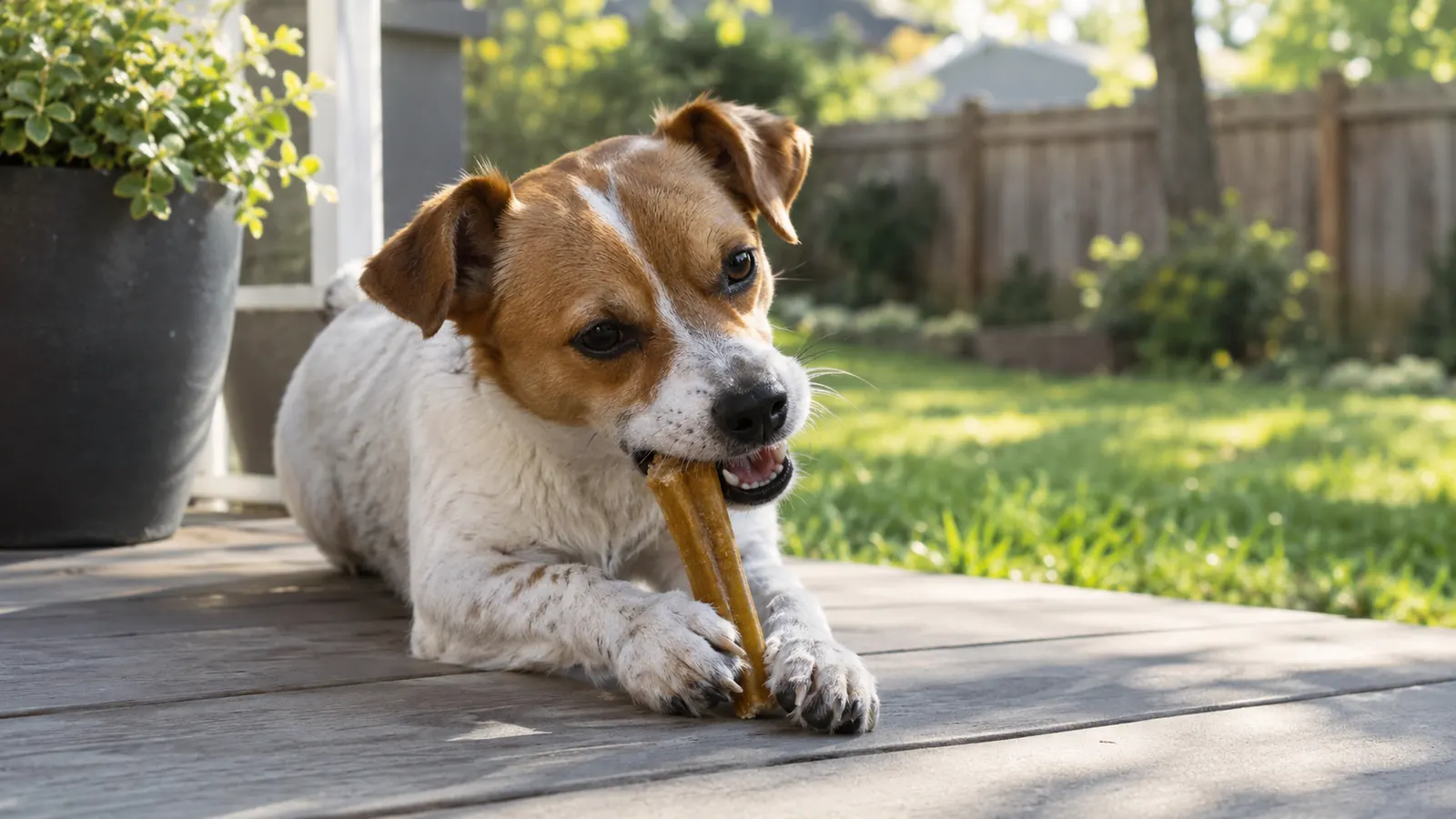
First, the chews do not last long. Maisie finishes one in about seven minutes. If you are looking for a chew that will occupy a dog for an hour, this is not it. It is a quick, satisfying treat with a dental benefit, not a boredom buster.
Second, the texture changes as they chew. The outer layer softens quickly, and pieces can break off. For a gulper like Maisie, I had to watch that she was actually chewing and not swallowing chunks. She figured it out, but I would not leave a dog alone with one until you are sure how they handle it.
Third, they are not a cure. If your dog already has significant tartar, red gums, or bad breath that does not improve, a chew is not the answer. That is a vet visit. Dentalife is for maintenance, not treatment.
There was one evening in November when a piece broke off and Maisie tried to swallow it without chewing. I heard the gulp and fished the rest of the chew out of her mouth. Nothing bad happened, but it reminded me that she is a gulper and always will be. Now I break her chew in half before I give it to her. She still gets the same amount, but the smaller pieces force her to slow down, and it gives the ridges more surface to work against. Another thing nobody tells you is that the chews soften if you leave the bag open. I lost a few to a humid week in September when I forgot to clip the bag shut, and they turned into a crumbly mess. Now I keep the bag in the pantry with a binder clip on it, and they stay firm for the whole bag.
What I Liked
- Maisie genuinely loves them and finishes every one
- Noticeably better breath after about two weeks
- Helped slow tartar buildup on her back molars
- Short, recognizable ingredient list with no rawhide and no chicken
- Easy to give daily, and the 40 count bag lasts over a month
- Made in the USA
Where It Falls Short
- Each chew lasts only five to ten minutes, so it is not a long-lasting chew
- About 75 calories per chew, so you have to adjust daily food intake
- Does not replace brushing or a vet visit for existing dental problems
- The small to medium size is easy for a determined dog to finish quickly
- Texture can soften and break into pieces, so supervision matters for gulpers
Who This Is For
Dentalife is for the everyday one dog household where you want to do something good for your dog's teeth without turning treat time into a battle. It is for dogs who finish a chew in a few minutes and look at you for another, because the dental benefit only happens if they actually eat it. It is for owners who brush sometimes but not every day, and want a daily habit that helps fill the gap. And it is for dogs with sensitive stomachs, because the short ingredient list and the lack of chicken made it a safe choice for Maisie when other treats had failed. If you have a dog who turns up her nose at dental sticks, Dentalife may still work because the texture is closer to a biscuit than a rubbery stick. Maisie is picky about texture, and she never hesitated after the first night.
If your dog is like Maisie, a treat-motivated dog who will eat anything that is put in front of her, Dentalife is one of the easiest dental products to stick with. There is no wrestling, no finger brushing, no special time set aside. You just hand over a chew at the same time every day and let the ridges do the work. For a busy household, that consistency is the whole point.
Who Should Skip It
Skip Dentalife if your dog is a power chewer who destroys a chew in under a minute, because the dental benefit needs chewing time. Skip it if your dog has existing dental disease, red gums, or heavy tartar, because that needs a vet, not a treat. Skip it if you are looking for a long-lasting boredom buster, because this is a five to ten minute chew at best. And skip it if your dog is on a strict calorie budget, because 75 calories a day adds up fast for a small dog. I would also skip it if you want a chew that does double duty as a reward during training, because it is too big to carry in a pocket and too crumbly to break into tiny pieces. For training, use a different treat and save Dentalife for the end of the day.
I would also skip it if you are hoping for a chew that will entertain a dog during a long workday. Dentalife is a snack, not an activity. Maisie is done in under ten minutes and then she is back looking for the next thing. If you need a chew that lasts, you need something denser, and that is a different product for a different job.
The nightly chew that earned a permanent spot in our routine
Months in, Dentalife is still the treat Maisie gets every night. It helped her breath, slowed the tartar, and made her happy. If that sounds like what you are looking for, check today's price on Amazon.
Amazon Check Today's Price on Amazon →