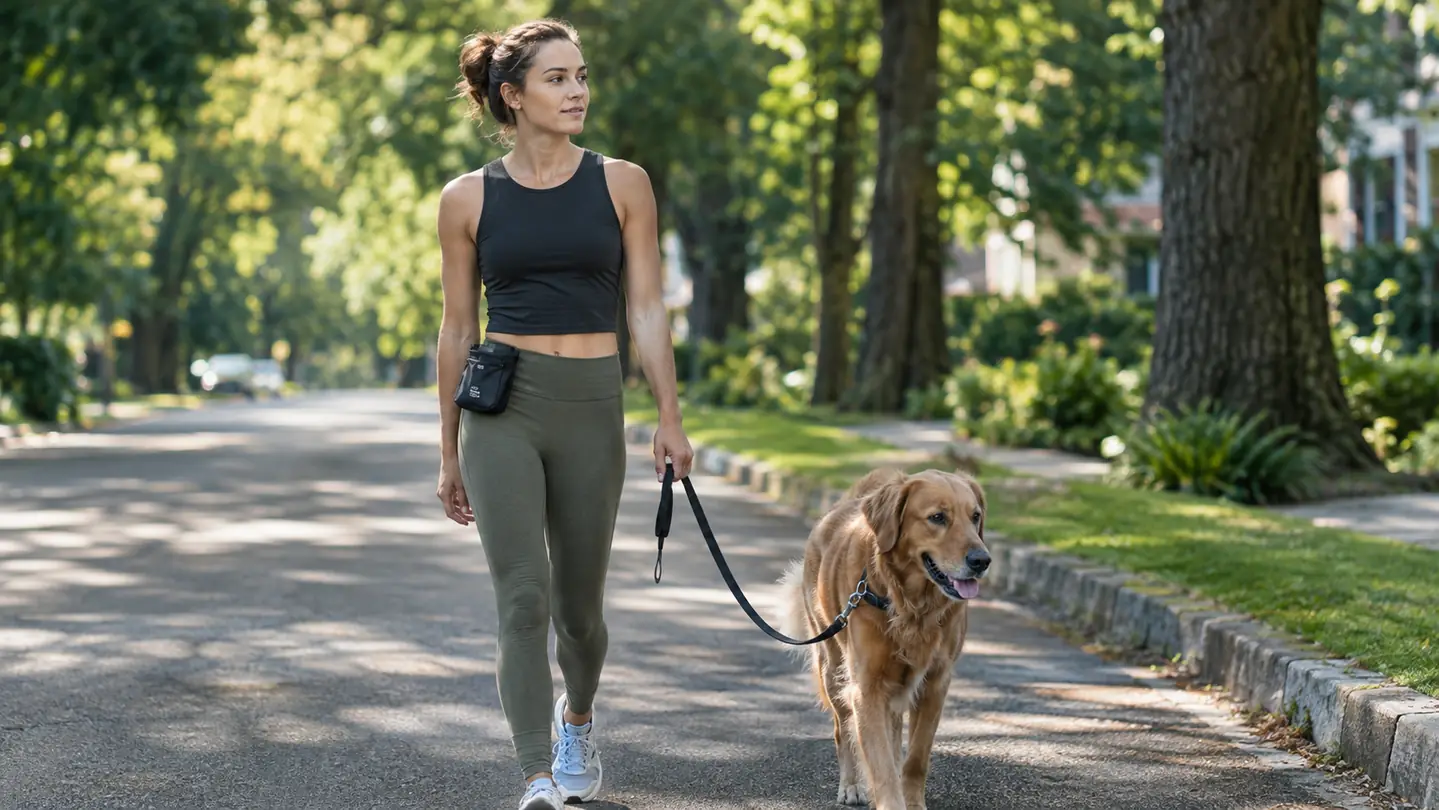
Maisie and I have walked the same neighborhood loop for two years, and for most of that time I rewarded her the hard way. I kept treats loose in my coat pocket, which meant fumbling with keys and crumpled receipts while she pulled toward a squirrel. By the time I got a piece of chicken out, the moment had passed and she had already decided that pulling was the way to get what she wanted. That changed when I started using the Mighty Paw treat pouch.
The routine I use now is simple enough to do every single day, and it works with a dog who has a sensitive stomach. Maisie is a five-year-old beagle mix, about 26 pounds, and she would eat until she was sick if I let her. So the pouch is not just about convenience. It lets me count out exactly how many rewards she gets on a walk, which keeps her happy and keeps her stomach calm.
A pouch that makes rewarding feel natural
The Mighty Paw treat pouch clips to your waistband, opens with one hand, and stays closed with a magnetic clasp. It is the pouch I use on every walk, and it is worth checking today's price on Amazon.
Amazon Check Today's Price on Amazon →Why a Treat Pouch Changed Our Walks
Before the pouch, I did not realize how much time I was wasting on the mechanics of treats. Every reward meant stopping, digging into a pocket, and often dropping something. That pause was long enough for Maisie to lose focus. A treat pouch puts the reward at my waist, closes with a magnetic clasp, and lets me keep walking while I reach for a piece. The difference felt immediate.
The other change was in my own attitude. When I knew I could reward a good moment in less than a second, I started looking for good moments instead of waiting for bad ones. That flipped the whole walk from a constant correction session to a quiet cooperation. The Mighty Paw pouch did not train Maisie by itself, but it made training feel possible on a busy morning.
Step 1: Set Up the Pouch Before You Leave the House
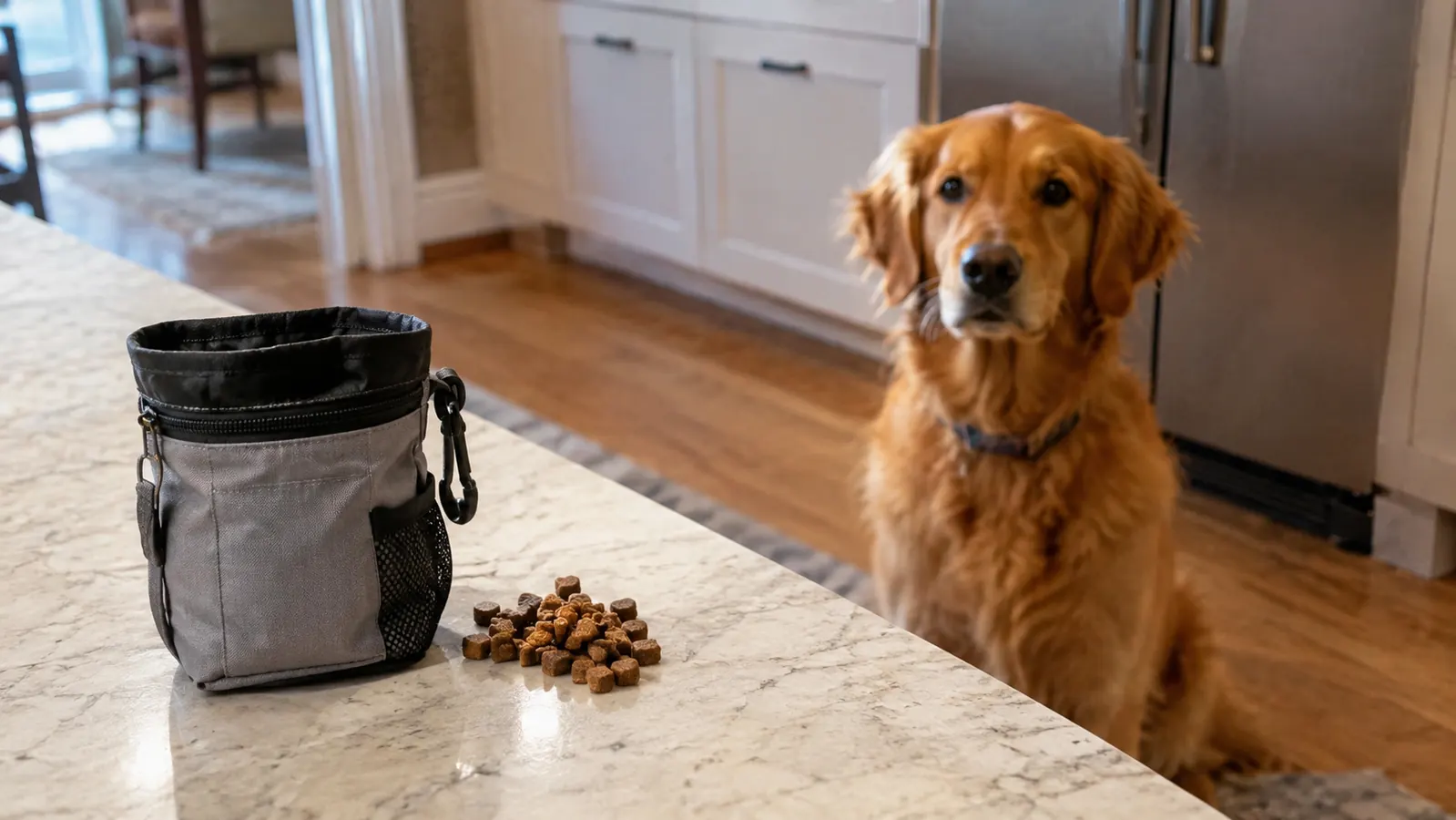
Fill the pouch in the kitchen, not at the front door. The dog will hear the treat bag crinkle and start dancing at your feet, and that is not the calm behavior you are trying to encourage. I put the Mighty Paw pouch on the counter, open the magnetic clasp, and drop in a handful of treats that I have already broken into pea-size pieces. The magnetic clasp stays open while I fill it, then snaps shut with a satisfying click.
Counting matters more than you think. I give Maisie ten pieces for a twenty-minute walk, and I keep the rest in a small bowl back in the kitchen. That way I know exactly what she is getting. If I just reached into a big bag all walk, I would lose track and she would end up with twice as many calories and a grumbling stomach. The pouch holds just enough for one walk, which is exactly the portion control a food-motivated dog needs.
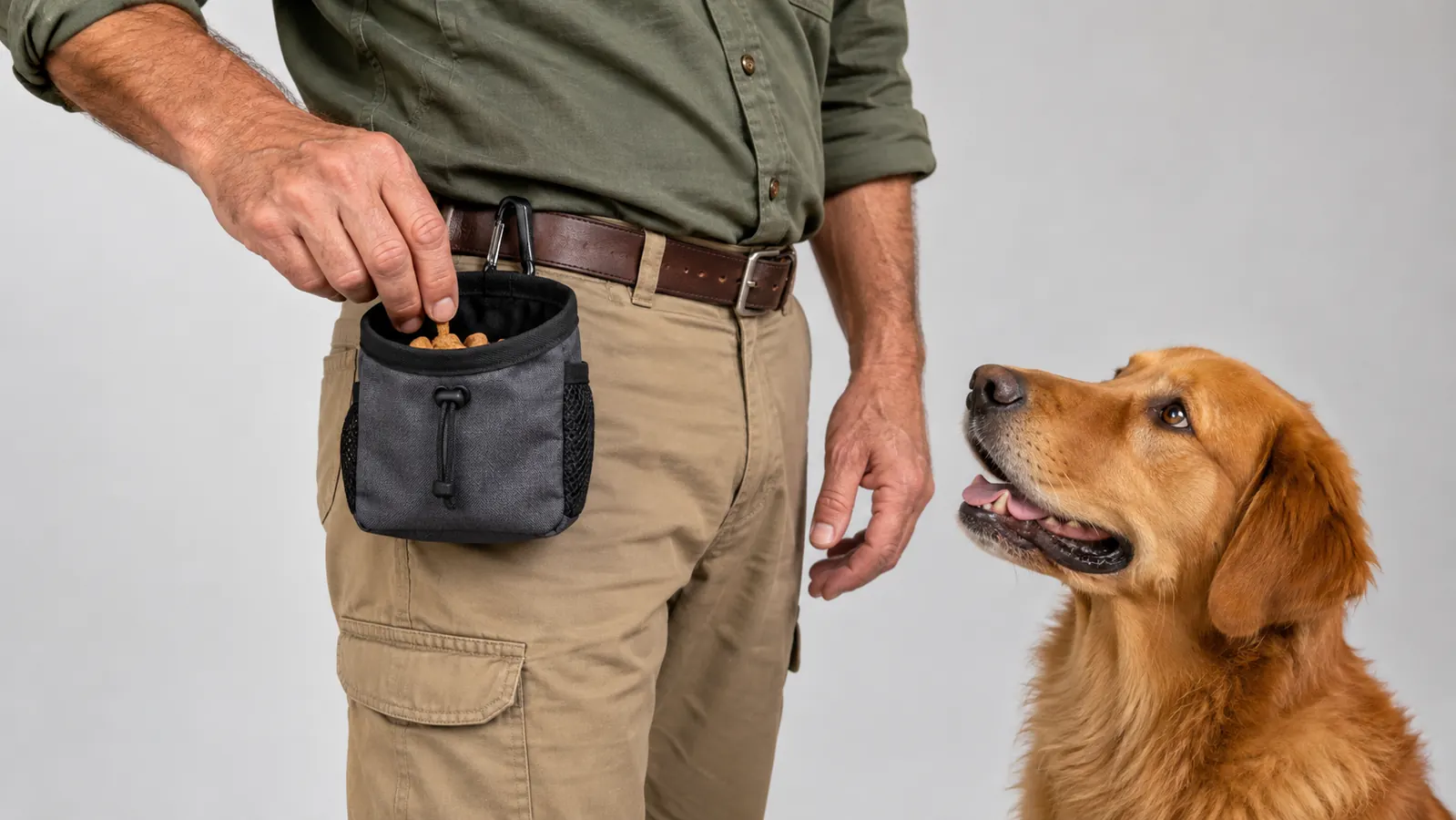
Clip the pouch to your waistband, your belt, or even the strap of a crossbody bag. The magnetic clasp snaps shut on its own, so I never worry about treats spilling when I bend down to tie a shoe. That no-spill clasp is the reason I stopped using a plastic baggie, which always seemed to end up with holes in the corners. It also means I can open it with one hand while I hold the leash with the other, and that one-handed access is what makes the whole system work.
Step 2: Decide What Behavior You're Rewarding
Before you step outside, pick one behavior to reward. For us, it is a loose leash. That means Maisie walks beside me without pulling, and the leash has a soft curve instead of being stretched tight. If you reward everything, you teach nothing. Pick the behavior that is going to make your walks more pleasant, and reward only that for a week. You can always add a second behavior later, but starting with one keeps the message clear.
The easiest way to mark the behavior is with a word. I say "yes" the instant Maisie looks back at me or gives slack in the leash, then I reach for the pouch. The word tells her exactly which action earned the treat. You can use a clicker instead, but a word means one less thing to carry, and the Mighty Paw pouch already takes care of the treat side of things. The marker word should be the same every time so the dog can count on it.
Keep your expectations reasonable for the first few walks. Maisie was not suddenly perfect. She would walk nicely for a few steps, then lunge at a smell. I would simply stop, wait for her to come back to my side, say "yes," and reward. That repetition is what builds the habit, and the pouch makes it easy to do without stopping to dig through a pocket. Within a week, the lunging started to happen less often because she realized that calm walking paid better.
Step 3: Reward at the Right Moment
Timing is the whole ballgame. A treat given three seconds late is a treat for whatever the dog is doing at that moment, not for the behavior you wanted. When Maisie's leash goes slack, I say "yes" right away, then reach into the pouch. The magnetic clasp opens with a light pull, so I can get a piece out with one hand while I keep holding the leash with the other. That speed is the difference between rewarding a loose leash and rewarding a sniff.
You do not need to be fast enough to impress anyone. You just need to be consistent. The first time I tried this, I fumbled and dropped a treat on the sidewalk. Maisie ate it before I could pick it up, and she learned that the ground was a perfectly good source of food. Now I take one piece out at a time and hold it until she is walking beside me again. That little pause also helps her understand that the treat comes from me, not from the air.
One thing that surprised me was how much calmer the walk became when I stopped stopping. In the past, I would jerk the leash or say "no" over and over. Now I mostly stay quiet, wait for the good moment, and reward it. The pouch holds the treats at my waist where Maisie can smell them, but she has learned that the treats come only when she is walking nicely, not when she is pulling. That realization changed our morning walks more than any other single thing.
Step 4: Keep the Treats Coming at the Right Rate
At first you may reward every few steps, and that is fine. The goal is to build a strong connection between walking nicely and getting a reward. After a week or two, start rewarding every other good moment, then every third. This is called intermittent reinforcement, and it actually makes the behavior stronger because the dog never knows when the next treat is coming. The pouch makes this easy because you can reach in and out without breaking stride.
For a dog with a sensitive stomach, the size of the treat matters as much as the rate. I break each training treat into two or three pea-size pieces. Maisie does not care about the size. She cares that something appears. Ten small pieces spread across a walk gives her the reward she wants without giving her an upset stomach later. If your dog has a sensitive stomach like mine, you can also mix in a few pieces of her regular kibble to stretch the reward even further.
Keep a mental tally of treats across the whole day. If Maisie gets a training session in the kitchen in the afternoon, I trim the number of treats on the evening walk. The Mighty Paw pouch makes it easy to count because I fill it with a set amount before we leave. I know that when the pouch is empty, the rewards for that walk are done, and that is exactly how I want it. No guessing, no overfeeding, and no treats left in the bottom of a pocket.
Step 5: Phase Out the Pouch Over Time
The pouch is not meant to be a permanent crutch. Once Maisie was walking nicely most of the time, I started leaving the pouch at home for some walks and taking it for others. She quickly learned that every walk might have treats, so she kept the loose leash even when the pouch was not there. That is the goal: a dog who walks well because the habit is built, not because she can see the bag.
When you do use the pouch, mix in praise and a quick scratch behind the ears. Maisie loves a "good girl" almost as much as she loves chicken, and pairing the two means the praise starts to work on its own. Over time, you can replace more of the treats with praise, and the pouch becomes something you reach for mainly for training sessions and new environments. That way the treat pouch keeps its value instead of becoming an expected part of every walk.
I still keep the Mighty Paw pouch in the front hall closet. We use it for the morning walk when I want to reinforce a new behavior, and we use it in the kitchen for short training sessions. It has held up for five months with no broken clasp and no torn seams, which is more than I can say for the plastic baggies I used before. The fabric wipes clean easily, and the magnetic clasp still snaps shut like it did on day one.
What Else Helps
A treat pouch is one piece of the puzzle. A front-clip harness helped Maisie stop pulling because it turned her sideways when she lunged, which gave me a chance to reward her for turning back. A short leash, about four feet, gives you more control than a retractable one and keeps the dog close enough to learn. And a regular walking route with fewer distractions makes the first few training walks much easier.
Also, keep the treats genuinely special. Maisie gets her regular kibble at meals, so a piece of plain boiled chicken or a soft training treat feels like a big deal. If you use the same boring kibble you give at dinner, the reward loses its power. The pouch keeps the special treats fresh and close, which makes the whole system work. I also keep the pouch out of reach between walks so Maisie does not treat it as a snack dispenser.
One more thing that helped was practicing in the backyard before we ever hit the sidewalk. I would clip on the pouch, walk a few steps, mark the good behavior, and reward. Five minutes of that a day built the same muscle memory we now use on our morning walk. The pouch works just as well for a backyard session as it does for a mile-long walk, so you can start small and build from there.
Counting out ten pea-size treats before a walk means Maisie gets rewarded without getting an upset stomach.
Make your next walk the calm one
The Mighty Paw treat pouch is the one tool I reach for every single day. If you want to reward good walking behavior without fumbling through your pockets, check today's price on Amazon.
Amazon Check Today's Price on Amazon →